
Less, But Better
Dieter Rams Through a Japanese Lens
Dieter Rams was a German industrial designer, best known for his work at Braun from the 1950s to the 1990s. He’s widely associated with the idea “less, but better,” and that way of thinking is clear across everything he designed. His work isn’t trying to impress you straight away. It’s quieter than that. It focuses on how something works, how it feels to use, and how it sits within a space over time. A lot of what we see in design today still reflects that thinking, whether people realise it or not.
While watching the documentary, what stood out to me most wasn’t actually one of his products, it was his home. Specifically, the Japanese influence in both the architecture and the garden. I didn’t expect that, but the more I looked into it, the more it made sense. Rams was never formally trained in Japan, but he openly admired Japanese culture, and you can see that his philosophy lines up closely with it. It doesn’t feel like surface-level inspiration. It feels deeper than that.



One idea that really connects the two is the concept of Ma. It’s about the space between things, not just empty space, but meaningful space. The character itself combines “gate” and “sun,” which creates this image of light coming through an opening. It shifts your focus away from the object and onto the space around it. In traditional Japanese interiors, objects are placed very deliberately so that the emptiness around them gives them more presence. That space isn’t accidental. It’s doing something.
What’s interesting is that Ma isn’t only visual. It shows up in pauses, in silence, in timing. The gap between notes in music, or the pause before someone responds in a conversation. It creates room to think. And that feels very close to how Rams approaches design. In a world where everything is competing for attention, constantly adding more, his work does the opposite. It removes. Not for the sake of looking minimal, but to make things clearer and easier to live with. That’s where his idea of “as little design as possible” feels more intentional than aesthetic.
His products don’t try to dominate your attention. They sit back and let you use them. That restraint creates a kind of mental space, not just visual space. You’re not fighting the product to understand it. And I think that’s something that often gets lost now. A lot of products are designed to stand out first and work second. Rams flips that. The clarity is the point.
You see the same thinking in his home in Kronberg. The geometry is simple, the materials are natural, and the boundaries between inside and outside are softened through large glass openings. Nothing feels forced. But what stood out to me most was the garden. The placement of everything, the plants, the rocks, the spacing, feels controlled, but not in a rigid way. It’s balanced. There’s a calmness to it that doesn’t come from adding more detail, but from knowing when to stop.


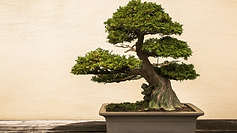

Japanese gardens work similarly. They’re not just decorative spaces. They’re composed carefully, where every element has a role, including the empty areas. There’s a level of discipline in that. Even something like a bonsai reflects it. You’re shaping something over time, but you’re also holding back. That idea of restraint feels very aligned with Rams’ approach. It’s not about doing less because you can’t do more. It’s about choosing not to.
I don’t think it’s accurate to say Rams were directly copying Japanese design. It feels more like both arrived at similar ideas from different contexts. Post-war Germany was rebuilding, not just physically, but culturally. At the same time, Japan was going through its own period of redefinition. Both ended up valuing precision, function, modesty, and responsibility. There’s a shared understanding that design isn’t just about appearance. It shapes how people live.
What’s interesting is that simplicity in both cases isn’t the easy option. It actually requires more control. It means being clear about what matters and being confident enough to remove everything else. That’s something I think a lot of design struggles with now. It’s easier to add than to take away.
So rather than seeing Rams as being visually inspired by Japan, it feels more accurate to say he was aligned with that way of thinking. A shared belief that design should be quiet, useful, and considered.
And right now, with how much noise there is in both products and everyday life, that approach feels more relevant than ever.
