
The Return of the “Ugly” Sandal
The Birkenstock cycle
Whilst I’ve been at uni, there’s been a real rise in people wearing Birkenstocks. I ended up getting a pair myself, and I genuinely love them. They are quite expensive for what they are, but at the same time, they just work. I remember when I first got them, both my parents, separately, said they used to have a pair back in the day. That surprised me. In my head, Birkenstocks felt like something that had just appeared out of nowhere, but clearly they’ve been around long enough for a whole other generation to have worn them already. My mum even said she’d had hers for about twenty years, which made me look at them differently straight away. That kind of longevity isn’t something you usually associate with fashion products now, and I think that says a lot.
That’s what made me start thinking about them more. The more I looked into it, the more I realised Birkenstocks aren’t just a trend. They’re more of a culture shoe. They seem to come back at specific moments, usually when people start valuing comfort and authenticity more than appearance. And right now at uni, you can see that everywhere. People walking around in socks and Birkenstocks, oversized hoodies, relaxed outfits. It’s a very laid-back look. What’s interesting is that these aren’t fashion shoes in the traditional sense. They’re not flashy, they don’t look expensive, they’re not performance-driven. Yet somehow, one of the least designed-looking shoes has become one of the most worn. And personally, I don’t think that’s accidental. I think it says something quite strong about what people are starting to value.
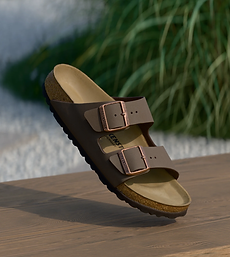


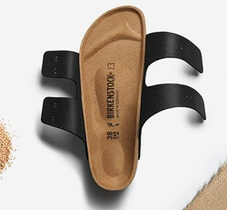
When you actually look at the product itself, it makes more sense. Birkenstocks are built around comfort, but not in the way people usually think about comfort. Most people associate comfort with softness, like cushioning or something that feels good instantly. Birkenstocks are different. The cork footbed is designed around ergonomics and foot health, and over time, it moulds to your foot. So the comfort comes from the fit becoming personal to you. After wearing them in, they just sit on your feet properly. It’s less about softness and more about support and shape. I think that’s quite a bold approach. It’s not trying to win you over immediately. It almost asks you to commit to the product first, and then it rewards you over time. That’s quite rare in modern design, where most things are built for instant satisfaction.
There’s also a kind of philosophy behind it. It feels very practical, very honest in its materials, and focused on longevity. Nothing about it is trying too hard. The exposed cork, the simple straps, the lack of unnecessary detailing, it all feels quite intentional. I think that honesty is what makes it a strong design. It’s not hiding what it is. That contrasts quite heavily with a lot of fashion, which often feels appearance-first. Branding, aesthetics, how something looks to you. With Birkenstocks, it feels function-first. That doesn’t mean they can’t look good, but that’s not the main driver. The sandals, especially, are almost purely functional. They weren’t designed to look good, they were designed to work, and I think that clarity in purpose is exactly why they’ve lasted.
Their history backs this up as well. In the 1970s, they were picked up by hippie culture, which was all about rejecting consumerism and leaning towards natural materials and simple living. Birkenstocks fit that perfectly. They had that earthy, practical, non-mainstream feel. Then, in the 80s and 90s, students and different subcultures started wearing them. That’s probably where my parents picked them up from. They were relatively affordable, durable, and didn’t follow trends. What’s interesting is they became popular with people who weren’t trying to be popular. That’s the key paradox. They didn’t rise because they were fashionable. They rose because they weren’t. And I think from a design point of view, that’s quite powerful. It shows that strong design doesn’t always need to chase attention, sometimes it just needs to be right.
There’s a clear cycle with them. They start as a functional product, get adopted by a certain group, become more widely known, and then eventually get labelled as uncool and fade out. But then they come back again. And when they come back, they don’t feel like a trend in the usual sense. It’s almost like they’ve just been waiting. It feels less like they follow trends and more like they return when the conditions are right. When fashion becomes too polished or too controlled, something like Birkenstocks comes back and disrupts that. I think that’s why they feel quite refreshing when they reappear. They almost reset expectations of what a product should be.

Right now, there are a few reasons why that’s happening again. One of the biggest is the shift after COVID. People got used to being comfortable, staying at home, not dressing up every day. That changes your baseline. Once you get used to comfort, it’s hard to go back to prioritising appearance all the time. There’s also this idea of an effortless aesthetic. Especially in places like art schools or creative environments, there’s a look where it feels like you’re not trying, but it still works. Over-styling can feel outdated, and that shift makes something like Birkenstocks fit in naturally. I think this is where design and culture overlap quite clearly. The product hasn’t really changed, but the context around it has, and that’s what makes it feel relevant again.
Sustainability plays a role as well. With fast fashion growing so much and the damage that comes with it, people are more aware of what they’re buying. There’s more value in something that lasts. People are more willing to pay for durability and longevity. Even small things like being able to repair a product matter more. One of my mates had a pair where the strap broke, sent them back, got them fixed, and is still wearing the same pair now. That builds a different kind of relationship with the product. It’s not disposable. And I think that’s something good design should aim for. Not just something you buy, but something you keep.
At the same time, fashion feels like it’s moving away from loud branding. Big logos, bold colours, obvious statements. There’s a shift towards something quieter. In a world where everything is curated, looking uncurated has become desirable. It almost feels like a flex in itself. Even for me, I’ve noticed my own style changing. I still think it’s improved, but I care less about brands and more about how things feel and fit. A lot of what I wear now is second-hand or unbranded. That shift in mindset makes something like Birkenstocks feel more aligned with how people actually want to live, rather than how they think they should look.
And it’s not just Birkenstocks. You can see the same pattern with other things. Crocs are a good example. Not traditionally good-looking, but comfortable, durable, and everywhere. New Balance went from being seen as “dad shoes” to something genuinely popular again. Thrifted and vintage clothing have grown massively, especially with platforms like Depop and Vinted making it easy. The pattern is quite clear. Things that were once rejected come back because they feel more real. I think that says a lot about the direction design is going in as well. Less about perfection, more about honesty and use.

That’s probably the bigger point. It’s not just about what we’re wearing, it’s about what we value. Maybe Birkenstocks aren’t popular despite being seen as ugly. Maybe they’re popular because they reject the idea that everything has to be perfect. I think that’s what makes them strong. They don’t try to solve everything, they just do one thing properly. And in a market where a lot of products try to do too much or try too hard, that simplicity stands out.
It feels less like fashion and more like a reset. And honestly, I think that’s something that’s needed more widely. Not just in fashion, but in how products are designed and how people interact with them. With social media, especially, everything has become very controlled and very performative. There’s pressure to present yourself in a certain way, to look a certain way, to keep up with everything. And at some point, that goes too far.
Something like Birkenstocks coming back feels small, but it reflects a bigger shift. A reminder that not everything needs to be optimised or perfect. Sometimes things just need to work, last, and feel right. And personally, I think that’s a direction design should be moving towards more.