
The iPad: Apple’s Quiet Masterpiece
The product people misunderstood
The iPad, I think, is probably one of Apple’s best products. For me, it’s arguably where Apple has excelled the most, not just when it first came out but even now. When people talk about Apple’s best products, they usually go straight to the iPhone or the Mac. But I think the work Apple has done with the iPad really shows what they’re capable of when they fully commit to an idea and refine it over time. It feels less obvious, but in a way, more impressive.
Long before the iPad, tablets already existed, but they never really worked. Microsoft and others tried to take a laptop and shrink it down into something more portable. On paper, it made sense at the time, but in reality it completely missed how people actually use technology. These devices relied on styluses, ran full desktop operating systems, and ended up feeling like awkward, compromised laptops rather than something new. They weren’t intuitive, they weren’t simple, and most importantly, they weren’t enjoyable to use.


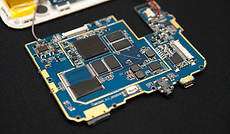

What’s interesting is that the failure wasn’t really about the technology. The components were there, the screens existed, and the processing power was just about enough. The real issue was how the product was being thought about. They designed a tablet to be a smaller laptop instead of rethinking what a tablet should actually be. That shift in thinking is where Apple really stands out, and it’s something they’ve carried through ever since.
Apple approached it from a completely different angle. Instead of asking how to make a computer smaller and more portable, they focused on how interacting with a screen should feel. That change in perspective is what led to multi-touch becoming the core of the experience. Being able to use your fingers to scroll, pinch, and swipe wasn’t just another feature. It made the interaction feel natural in a way that a stylus never could. You weren’t translating your actions through a tool anymore, you were directly interacting with what was on the screen.
That direct interaction is what makes it work. There are fewer steps between what you want to do and what actually happens, and that makes the whole experience feel more immediate. It requires less learning, it’s more intuitive, and the feedback you get is instant. Instead of adding more features or complexity, Apple stripped things back. That decision, to simplify rather than add, is something that feels very deliberate and is probably one of the main reasons the iPad works as well as it does.
The iPhone played a huge role in making all of this possible. Apple had experimented with tablet ideas before, but they held back because the technology and the users weren’t quite ready. The iPhone became the testing ground. It proved that people were willing to accept touchscreens as the main way of interacting with a device, and more importantly, that they actually preferred it. It also showed that software could be redesigned around simplicity and still be powerful.

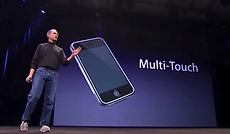


By the time the iPad launched, people already understood the basics. They didn’t need to be taught how to use it from scratch. It was essentially a scaled-up version of something that already made sense to users. That made the transition much smoother, and I think that’s a big reason why it succeeded where earlier tablets failed.
When the iPad first came out in 2010, though, the reaction was still pretty mixed. People didn’t really understand why it existed. It didn’t replace your phone, and it didn’t replace your laptop, so it felt unnecessary. If you already had both, what was the point of something in the middle? A lot of people just saw it as a big iPhone or a big iPod, and it was hard to justify spending money on it.
But that confusion is actually what makes the iPad so interesting. Most successful products improve something that already exists and do it better. The iPad didn’t really do that. Instead, it created a completely new space that people hadn’t really considered before. It was well designed and clearly thought through, but at the same time, it was poorly understood. That combination is quite rare.
For a long time, the iPad didn’t really have a clear identity. It sat somewhere in between a phone and a laptop, being more powerful than one but less capable than the other in certain ways. At launch, it was mainly used for watching videos, browsing the web, and reading. That then raises the question of whether that’s enough to justify a whole new device when those things can already be done elsewhere.
That’s where it becomes a bit of a balancing act. If it does too little, it feels unnecessary. If it tries to do too much, it risks losing the simplicity that makes it appealing in the first place. The iPad has always sat in that tension, and I think that’s part of what defines it.
Over time, Apple started pushing the iPad towards something more capable. The introduction of the Apple Pencil is a good example. At first, it didn’t seem like anything special, just another stylus. But actually using it changes your perspective. The level of control you get with pressure and tilt, especially for drawing or even just taking notes, makes it feel much closer to a real tool rather than an accessory. It adds something to the experience rather than getting in the way of it.


Alongside that, you have keyboards, trackpads, and multitasking features that start to make it look more like a laptop. On paper, it begins to feel like a replacement. But in reality, it never fully crosses that line. There are still limitations with file management, software, and more complex workflows that keep it separate. And that makes me think that this gap isn’t accidental.
It raises the question of whether Apple is actually trying to turn the iPad into a laptop, or if they’re deliberately holding it back. It feels like they’re carefully maintaining that space between devices. For some people, the iPad can replace a laptop now, but for others, especially for more complex tasks, a laptop is still necessary. That distinction still matters.
Instead, the iPad seems to focus on a different kind of experience. It’s simpler, more immersive, and more direct. The touchscreen and the way you interact with it, especially when paired with something like the Apple Pencil, create a different relationship with the device compared to a laptop. It’s less about doing everything and more about doing certain things in a better way.
That’s why people use it for drawing, note-taking, watching content, or just lighter, more focused work. The strength of the iPad isn’t that it tries to match a laptop in capability. It’s that it prioritises the experience of using it. That feels like a very intentional decision rather than a limitation.
Despite all the early confusion, the iPad has become one of Apple’s most important products. It’s found its way into education, creative industries, and everyday use. One example that stands out is how it’s used in aviation, where pilots replaced stacks of paper manuals with iPads. That shift shows how effective it can be when everything is brought into one simple, usable system.
What’s interesting is that its success didn’t come from dominating one specific category. It came from fitting into different parts of people’s lives in different ways. It adapts to the user rather than forcing the user to adapt to it, which is something a lot of products struggle to do. Even now, it’s hard to find a real competitor that does the same thing as well.


From a design point of view, I think the iPad is a really interesting case. It sits between simplicity and capability, and between form and function, without fully committing to one side. Most products tend to choose a clear direction, but the iPad doesn’t entirely do that. It doesn’t have a single, fixed purpose, and that could be seen as a weakness.
But I think that’s also where its strength comes from. Its value isn’t defined by one use case, but by how differently people can use it. That flexibility, combined with a strong core experience, is what’s allowed it to last and still feel relevant. In a way, it works not because it has a clear purpose, but because it leaves room for people to decide what that purpose is.