
Playful Minimalism, Done Differently
Where clarity meets character
I wanted to choose Alex’s presentation because it was on Teenage Engineering, and it’s a brand I didn’t know loads about before. I’d only really seen a few images of their products here and there, but my first reaction was that everything looked very clean and minimal. It felt quite similar to that Dieter Rams and Braun-inspired approach, but at the same time, there was something more playful going on. That contrast is what caught my attention. It didn’t feel like strict minimalism, it felt like something softer, more expressive. The more I looked at it, the more it started to feel intentionally strange, but in a way that still works.
As I started to understand more about the brand, especially their Swedish roots and studio culture, it made more sense. There’s that clear Scandinavian influence in the cleanliness and structure, but it doesn’t feel as rigid as you might expect. Even the idea of having something like a Lamborghini Countach in the studio just because it’s considered a beautifully designed object says a lot about how they think. It’s less about strict rules and more about surrounding yourself with strong visual references. Compared to something like Braun, which feels very logical and controlled, this feels looser. It still has clarity, but it allows for more personality. It’s almost like they’ve taken minimalism and decided which parts actually matter to them.

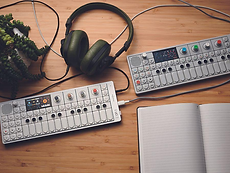
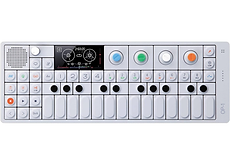

A good example of this is the OP-1. It’s not just about what the product does as a synth or sampler, it’s about how it feels to use. The interface is quite playful, and the visual feedback is more expressive than purely functional. It almost encourages you to slow down and explore, which is something you don’t really get with a lot of modern tech. Most products now are designed for speed and efficiency, but this feels different. It feels like something you spend time with. To me, it’s designed less like a tool and more like an instrument you build a relationship with, which shifts it away from pure industrial design into something more interactive and personal.
One point from the presentation that stood out was “design first, specs second,” and I think that’s where it gets more interesting. On one hand, it’s what makes their products stand out so much. They feel more memorable and more emotionally engaging than a lot of other tech products. But at the same time, it does raise the question of whether that comes at a cost. Their products are expensive, and sometimes they can feel a bit inaccessible. It almost feels like function becomes something they work around rather than something they start with. That’s not necessarily a bad thing, but it does make you question where the balance should be.
The more experimental side of their work, like the IKEA Frekvens or the Playdate, pushes this even further. These products are bright, slightly unusual, and don’t always fit neatly into one category. They sit somewhere between a functional product, a design object, and even a toy. That’s where it becomes a bit harder to define. Sometimes it feels like they’re designing for attention as much as for use, but at the same time, that’s also what makes them interesting. They’re willing to step outside of what a product is supposed to be.
It also made me think about who their products are actually for. They’re clearly not aimed at the mass market, mainly because of the price, but they’re not fully targeted at professionals either. It feels more like they’re designing for a certain type of person rather than a specific user group. Someone creative, or someone who values design differently. Buying one of their products doesn’t just feel like buying something functional, it feels like buying into a certain mindset or culture. That in itself becomes part of the design.
Overall, I do think it’s a good design. I think it stands out because it feels different, and there aren’t many other products that look or behave in the same way. At the same time, I wouldn’t say it’s universally a great design. There’s a tension in what they’re doing, somewhere between high-end product and something more playful, and it doesn’t always fully resolve. But maybe that’s the point. It challenges the usual ideas of function, value, and usability. It shows that design doesn’t always have to be about clarity and efficiency. It can also be about curiosity, immersion, and even a bit of confusion, and that’s probably what makes it stick.

