How Good Is Good Design?
How context changes what we value
How good is good design? It feels like a simple question at first, but the more I think about it, the more I realise it really isn’t. At first glance, good design feels like something that should be easy to define. As designers, we’re constantly surrounded by phrases like user-centred design, functionality, aesthetics and innovation. It almost feels like if you follow the right steps and tick the right boxes, you’ll arrive at something objectively good. But the talk I listened to completely challenged that assumption.
Instead of giving a checklist or a formula, it raised a more uncomfortable idea. What if good design isn’t fixed at all? What if it shifts depending on time, context and perspective? That’s what makes the question interesting to me. It sounds simple, but the more you think about it, the less clear the answer becomes, and that uncertainty is actually what makes it worth exploring.
One of the most interesting points that stood out to me was the idea that design doesn’t exist in a vacuum. It exists in time. And because of that, what we think of as good design doesn’t always age well. There are so many examples of products that were once celebrated for being cutting-edge, innovative and beautifully designed, but now feel outdated or even poorly thought out.


This happens for a few reasons. Technology evolves, user expectations change, and aesthetic trends shift. But I think the more important point is that the design itself hasn’t changed, our context has. That’s what makes it quite interesting from a design perspective, because it suggests that “good” isn’t an inherent quality of the object. It’s something we project onto it based on when and how we experience it.
It leads to a question I keep coming back to. If a design is no longer considered good today, was it ever truly good in the first place, or was it only good for its time? I think that idea alone makes it hard to treat good design as something objective.
At the same time, the reverse also happens. Some designs were criticised or misunderstood when they first came out, but later became seen as iconic or ahead of their time. I think this usually happens when people begin to understand the intention behind the design, or when culture shifts in a way that aligns with it. Nostalgia also plays a part, where people build an emotional connection to something that they didn’t appreciate before.
In some cases, what was first seen as bad design becomes appreciated not despite its flaws, but because of them. That completely flips the idea of design on its head. It makes me think that maybe design itself doesn’t change, but our perception of it does, and that perception is shaped by time and culture more than anything else.
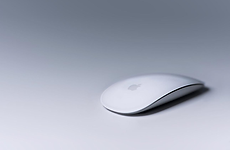


A good example of this, for me, is the original Apple Magic Mouse.
When it first came out, it was praised for its minimalist design. The multi-touch surface felt innovative and quite futuristic, and it matched Apple’s design language perfectly at the time. It was seen as a strong example of clean, modern design. But over time, opinions have shifted quite a lot.
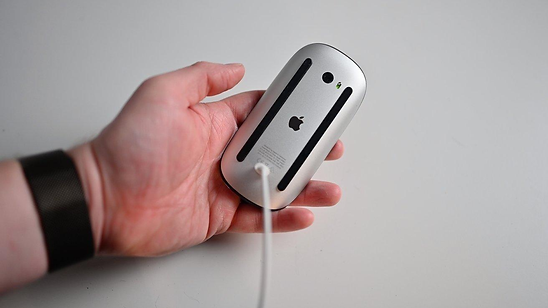
The ergonomics didn’t feel right for a lot of people. It’s very flat and not that comfortable to use for long periods. It also feels like a case where form was prioritised over function. And the charging port being underneath the mouse, meaning you can’t use it while charging, just doesn’t make sense from a usability point of view. Now it’s often used as an example of something that looks good but doesn’t actually work that well.
What’s interesting is that the product itself hasn’t really changed, but expectations have. People now expect better comfort, better usability, and they’re less willing to sacrifice function just for aesthetics. Even people who are fully invested in the Apple ecosystem still recognise that the Magic Mouse isn’t a great product. For me, that shows that good design can be temporary, and that aesthetic clarity alone isn’t enough if the experience doesn’t hold up.
You can see something similar happening in car interiors as well. Over the past five to ten years, there’s been a push towards extreme minimalism, especially with brands like Tesla removing physical buttons and replacing everything with screens. At first, it felt very modern and clean, almost like the future of design. But in practice, people realised that for things like climate control or volume, physical buttons are just easier and more intuitive to use.
Now, a lot of manufacturers are bringing those controls back, which is quite interesting. It shows that going all in on one design direction doesn’t always work long term. From a usability point of view, removing friction matters more than just creating a clean visual. It’s a reminder that interaction is just as important as appearance, if not more.

So is design just opinion? It starts to feel like it might be. On one side, there are clearly objective elements. A chair should support your weight, it should be comfortable, and it should function properly. A product should do what it’s meant to do. That part feels quite clear.
But beyond that, it becomes less defined. What looks good is quite personal. What feels intuitive can vary between users. What one person loves, another might dislike. Even within the design industry, opinions differ massively. So it feels like design sits somewhere in between, partly objective and partly subjective, which makes it quite hard to pin down.
This is something I’ve thought about quite a lot as a Product Design Engineering student. On the engineering side, things are mostly objective. You’re either right or wrong, and that makes sense. But on the design side, it’s much more open. What one person sees as a strong design, someone else might not.
Even in class projects, people approach the same brief in completely different ways and believe in what they’ve created. And I think that’s fair. But at the same time, I find myself forming opinions on what I think works better. Then it makes me question whether it’s fair to grade design when so much of it comes down to opinion. There’s no clear answer, but it does highlight how subjective design can be, even in an academic setting.


I also think time is probably the most important factor in all of this. In the moment, it’s almost impossible to say whether something is truly good design. Everything is judged within a specific context, current trends, current technology, and current expectations. But over time, some designs fade away while others remain relevant.
That suggests that good design isn’t just about immediate success. It’s more about long-term value. Designs that last tend to adapt well, maintain usability, and create some kind of emotional or cultural connection. But even then, nothing is guaranteed to stay relevant forever, because expectations will always change.
Another question that comes out of this is who actually decides what good design is. Is it the designers or is it the public? Designers might value innovation, concept and craftsmanship because they understand the process behind it. But most people care more about ease of use, comfort and overall experience.
Those two perspectives don’t always align. A product can win design awards but fail in the real world, or become widely loved despite breaking design rules. So it’s not clear who really defines good design, which again makes it feel less objective than we might like to think.
So maybe there is no checklist. You can follow every design principle, make something functional, aesthetic and innovative, and it still might not resonate. At the same time, something simple or unconventional can become widely loved.

Instead of thinking of good design as something you can prove, it might be something that emerges through use, experience, time and perception. That idea sits more honestly with me, especially when I think about how unpredictable people and culture can be.
When I think about my own work, I’m always trying to create something that is good design. But maybe that’s not the right goal. Maybe the goal is to create something that works well for people in a specific moment in time, knowing that how it’s judged in the future might change.
You can’t really predict what people will want in the future. The only thing you can do is design with intention and believe in what you’re creating. And I think that belief is quite important. Because if you don’t believe in what you’re designing, then there’s no real point in starting at all.